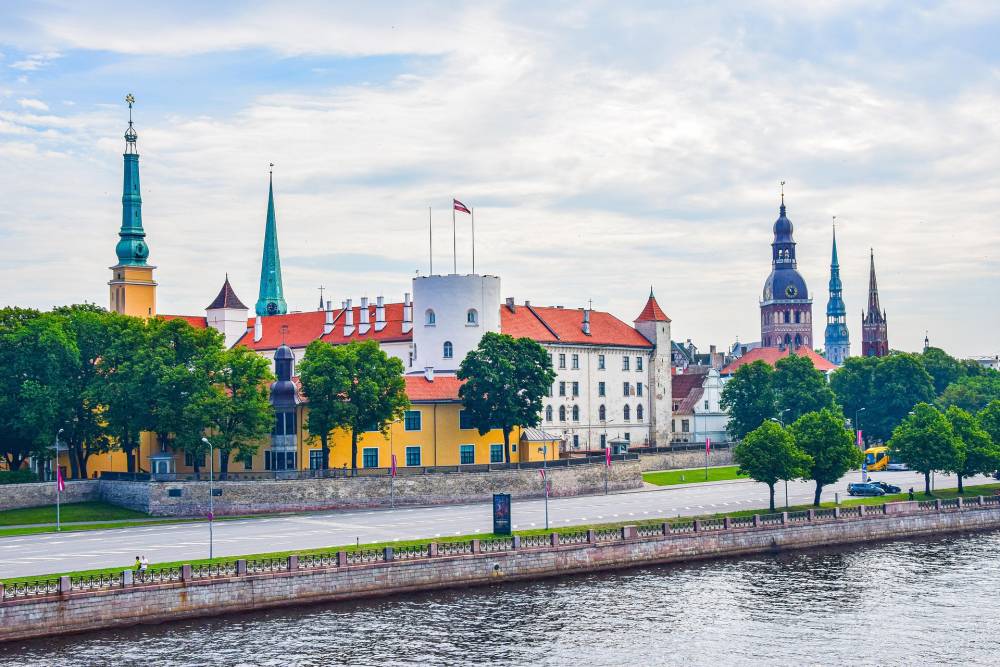
Discover why Latvia is a top EU investment hub in 2025. Explore real estate, fintech, logistics & more with EU LAW FIRM experts.
Latvia: A Strategic Investment Destination in 2025
In 2025, Latvia is increasingly recognized as one of the most appealing entry points into Europe’s investment landscape. The country combines the accessibility with long-term structural advantages that attract to both institutional and individual investors.
Gateway Location with Expanding Infrastructure
Latvia has a great geographical advantage since its position in-between Western Europe and Nordic–Baltic region provides natural advantages for trade and connections. Large-scale projects, such as Rail Baltica and modernization of ports in Riga and Ventspils, are re-shaping logistics and transport sectors. Those and many more developments do not only improve the flow of goods but enhance the value of related commercial real estate and service industries as well.
Stable European Base
Latvia’s membership in the European Union and in the Eurozone gives country the stability many people and businesses seek, such as:
· Predictable regulation;
· Access to the single market;
· Protection of the European Union law.
In the same moment, the Republic of Latvia offers a more cost-effective entry compared to many Western European hubs. This combination of balance, affordability and stability strengthens its appeal for businesses ventures and for lifestyle investments.
Favorable Tax Environment
Latvia’s corporate tax system is structured to encourage re-investment. Profits that remain within the company are untaxed, while only distributed dividends are bound by taxation. This approach is especially beneficial for growth-focused companies and investors seeking compounding value over time.
Sectors With Strong Momentum
Many industries are estimated to growth in the up-coming years:
· Transport and Logistics, supported by the European Union co-financed infrastructure;
Latvia is strategically located for facilitating transit and logistics among the European Union, Asia, and other global markets. The providers of Latvian ports, railways, road transport, customs warehouses, brokers, and logistics centers, along with shipping and forwarding agents and oil pipelines, offer efficient and competitive services. The logistics and transit industry accounts for approximately one fourth of overall service exports.
As a result, this sector draws the focus of both government and business, leading to major investments in transport infrastructure: ports, railways, and roads, primarily directed toward the transport corridors utilized for the transit. Port operators, railway companies, road carriers, customs storage facilities and brokers, logistics hubs, along with ship agents, oil and petroleum pipelines, and freight forwarders deliver effective and competitive services. The transport logistics industry manages roughly 40% of service exports within Latvia’s economy.
Consequently, it receives particular focus at the national and corporate levels, with significant funding for transport infrastructure—ports, railways, and roads, initially directed towards practical transit routes.
· Fisheries
Fisheries and aquaculture play a vital role in Latvia's economy and are essential for maintaining fishing traditions. In the 20 years since Latvia joined the European Union, the fishing sector has gained considerable support. Over these years, EU fund investments in the industry exceed 410 million euros. For instance, out of this total, over 150 million euros were allocated for production development, while 125 million euros were assigned for fisheries development. Fishermen have launched over 3,800 initiatives in diverse activities, subsequently fostering the expansion of the entire industry
· Metal Factories
Historically, engineering and metalworking have been among the primary industrial sectors in Latvia. Today, it has transformed and advanced into a highly competitive, creative, and efficient industry.
An educated and well-trained workforce is another great advantage in the field. Universities and colleges provide engineering, technology and science programmes, while technical and professional schools, certified according to EU standards, educate and train the skilled labor force using the latest technologies in automated and programmable equipment.
· Renewable Energy and Sustainability Projects, aligned with Europe’s RePowerEU strategy.
This plan encompasses fresh reforms and investments, with a total of 123.98 million euros designated, representing the highest possible allocation to Latvia from the RePowerEU initiative. Funding is intended to be allocated to initiatives that will notably reduce tariffs and enhance energy independence in Latvia;
· IT, Fintech and Cyber Security, Latvia offers a skilled and multilingual work force at competitive considerations.
For example, for promotion of the growth of the FinTech market, the Ministry of Finance executes a FinTech strategy designed to foster the development and utilization of innovative financial technologies and services to boost the competitiveness of the financial sector. Latvijas Banka launched specific instruments: the Innovation Hub and Regulatory Sandbox, subsequently incorporating pre-licensing evaluation. This presents a chance for prospective market participants to gain useful advice and suggestions right from the document preparation phase, thus enhancing their quality and decreasing the time needed for later licensing.
· Real Estate, especially in urban centers like Riga, where demand is shaped both by economic activity and lifestyle considerations.
Latvia boasts some of the most appealing property prices in the region when compared to various Western European nations. This indicates that regardless of whether you’re a novice purchaser or an experienced investor, you can discover quality properties affordably, offering peace of mind in your investment choice. Real estate in Latvia is still a field of new opportunities both for investment in new projects and for purchasing a property for individual goals.
For example, The Riga Waterfront initiative is being undertaken by Eagle Hills Properties, a global real estate developer and investor headquartered in the United Arab Emirates, with an intended investment exceeding €3 billion. This project is being developed already and seems to be one of many gems of the capital city, attracting citizens and tourists.
Mobility and Lifestyle Advantages
Beyond financial metrics, Latvia provides investors with additional benefits:
· Residency rights in the country open freedom of movement across the Schengen area;
· Access to high-quality education and healthcare;
· Affordable European lifestyle.
International Relations and EU Membership
Latvia benefits from numerous international trade agreements and partnerships as an EU member state, which provide access to foreign markets for its companies. Investors are further satisfied by the stability and dependability of investing in Latvia by this membership, which also indicates commitment to European standards of governance and quality.
Conclusion
In 2025, Latvia is more than just a standard investment market. Within the European Union, it is a strategic platform that offers safe, easily accessible growth in key fields. Latvia is providing a balance that is hard to find elsewhere for investors looking for both long-term value and personal mobility in Europe.
In case you have an investment project in mind or would like to relocate your company to Latvia do not hesitate to contact EU LAW FIRM corporate lawyers in Latvia info@eulawfirm.eu +37126742086